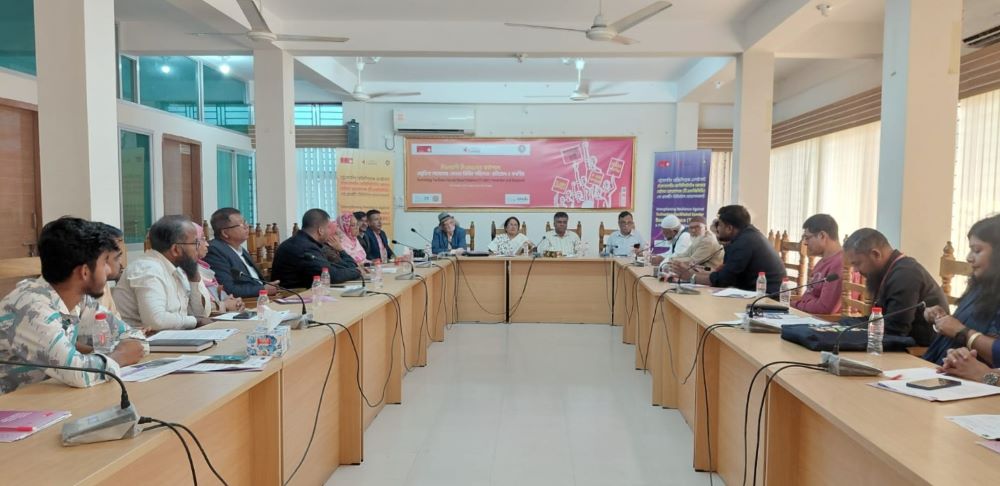
Bangladesh NGOs Network for Radio and Communication (BNNRC) organised a capacity-building workshop in Pirojpur, focusing on the prevention and mitigation of Technology-Facilitated Gender-Based Violence-TFGBV.
The event was graced by the presence of Md Ibrahim Khalil from the Department of Social Services, Pirojpur; writer, poet, litterateur and educationist Khairunnahar Ruby and a representative from the Department of Women Affairs.
A total of 33 representatives from CSOs and NGOs in Pirojpur district participated in the workshop. Through this initiative, participants are expected to play an important role in raising awareness within society, using their respective organisations to prevent and mitigate technology-facilitated gender-based violence-TFGBV and to advance inclusive digital development.
The objectives of the workshop were to provide media and civil society professionals with a clear understanding of the context, forms and impacts of technology-facilitated gender-based violence; relevant laws and policies and the opportunities of Bangladesh’s digital transformation. The workshop also aimed to encourage CSO and NGO representatives to take initiatives within their own institutions to strengthen knowledge and accountability on TFGBV prevention, identify concrete actions for digital development and TFGBV prevention and mitigation and contribute to positive social change. In addition, the workshop sought to foster continued collaboration and information-sharing among participants through networking, experience-sharing and sustained communication and to encourage advocacy so that relevant stakeholders at the local level play an effective role in preventing and mitigating TFGBV.
The workshop began with a welcome address by Ziaul Ahsan, Executive Director of Pirojpur Gano Unnayan Samity and member of the BNNRC Board of Trustees. He briefed participants on the workshop’s objectives and expected outcomes. In his keynote presentation, he clearly highlighted the scale of violence in Pirojpur district and the limitations of legal responses, including gaps in information, case management and the absence of reliable statistics. He also described the local reality of Pirojpur, including progress, challenges and constraints and shared his expectations and proposals for positive change in the district, along with a set of concise policy recommendations.
BNNRC is implementing the project Strengthening Resilience Against Technology-Facilitated Gender-Based Violence-TFGBV and Promoting Digital Development. The project is part of the Nagorikata: Civic Engagement Fund-CEF programme with technical support from GFA Consulting Group and financial support from Switzerland and Global Affairs Canada.
BNNRC’s Chief Executive Officer AHM Bazlur Rahman, made a detailed presentation on technology-facilitated gender-based violence-TFGBV—its concept, forms and negative impacts—as well as the concept of digital development, its desired outcomes and associated responsibilities. In his presentation, he discussed in detail the roles of local CSOs and NGOs in promoting digital development and preventing technology-facilitated gender-based violence, identifying new areas of work and relevant stakeholders for future initiatives.
A total of 12 designated speakers from among the participants took part in the discussion, along with contributions from others during the open floor session. Participants expressed their commitment to undertaking various awareness-raising activities from their respective positions, including disseminating information on the forms, prevention, mitigation and necessary actions related to combat TFGBV. CSO representatives also emphasised the importance of engaging new stakeholders—such as internet service providers-ISPs, cable network operators and agents of mobile financial services like bKash and Rocket—in TFGBV prevention efforts.
The guest speakers highlighted that women and girls, especially students are often primary targets of gender-based violence and TFGBV and drew attention to their particular vulnerabilities. They also acknowledged that men can be affected by TFGBV and stressed the need for policymakers, law enforcement agencies and community members to work together to address this growing concern. They underscored that effectively tackling technology-facilitated gender-based violence requires coordinated and comprehensive efforts from all segments of society. Press Release